
Table of Contents
- What Is Earthing and Grounding?
- Spiritual Grounding Techniques for Connection
- How to Ground Your Energy Daily
- Building Your Daily Grounding Routine
- Grounding for Urban Living and Modern Life
- The Energetic and Physical Benefits
- Grounding and Spiritual Alignment
- Frequently Asked Questions
Last Updated: September 29, 2026
What Is Earthing and Grounding?
Earthing and grounding are practices that reconnect you with the earth’s natural energy. When you make direct contact with the earth, whether barefoot on soil or grass, you’re allowing your body to absorb the earth’s electrons. This simple act has profound effects on your physical, emotional and spiritual wellbeing.
Grounding is both a physical and energetic practice, returning to your natural state, where you’re not isolated from the planet’s stabilising force. Many people spend their lives separated from direct earth contact, walking on concrete and living indoors. This disconnection can leave your energy scattered, your nervous system tense, and your spiritual centre unbalanced.
The earth beneath your feet holds a constant, gentle vibration. When you connect with it, you’re tapping into something ancient and reliable, how humans lived for thousands of years before modern barriers separated us from the ground.
Grounding works on multiple levels: physically it may help regulate sleep and reduce inflammation, emotionally it brings calm and clarity, and spiritually it aligns you with the planet’s natural rhythms.
Spiritual Grounding Techniques for Connection
Several grounding techniques deepen your spiritual connection, each working differently depending on your lifestyle, environment and what resonates with you.
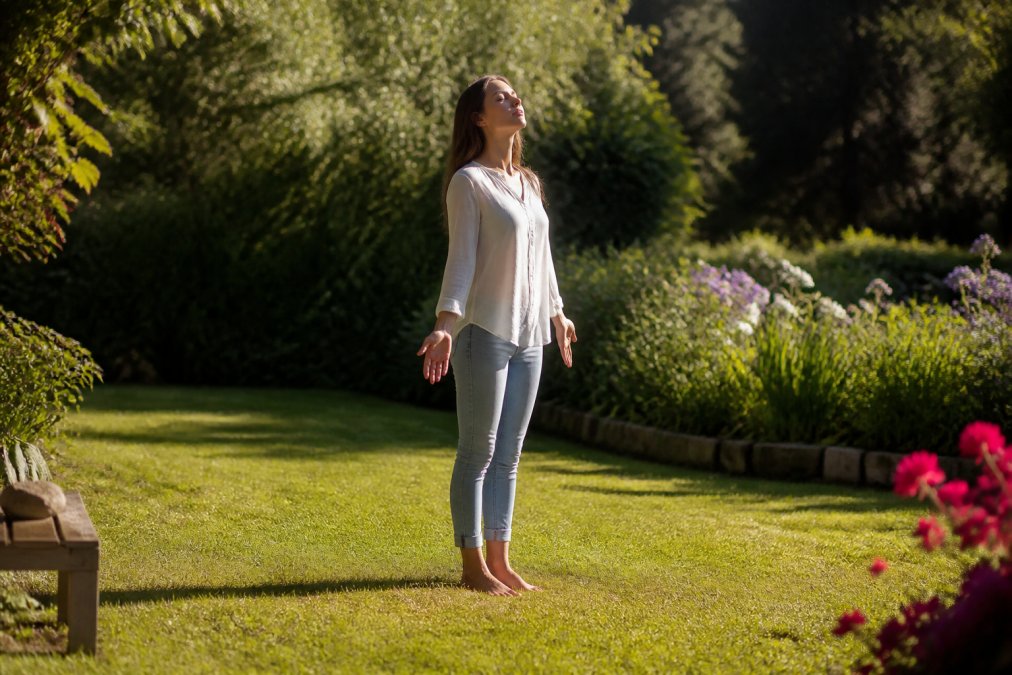
Barefoot Contact with Earth
The most direct form of grounding is removing your shoes and placing your bare feet on soil, grass, sand or stone. Start with five to ten minutes in a garden, park, or natural area. You might feel subtle warmth, tingling, or simply calm settling over you. Consistency matters, regular barefoot time, even a few minutes daily, creates a stronger energetic connection than occasional longer sessions.
Grounding Cords and Visualisation
When barefoot contact isn’t possible, use visualisation to ground your energy. Imagine a cord of light extending from the base of your spine down through the earth’s layers, anchoring into the planet’s core. Spend two to three minutes with this image each morning or when you feel scattered. Your mind is powerful, and focused visualisation creates real energetic shifts.
Forest Bathing and Nature Immersion
Forest bathing, spending time among trees, engages all your senses and grounds you naturally. Walk slowly, notice textures and sounds, and let your awareness expand beyond your thinking mind. This sensory immersion pulls you into the present moment, away from worry. Even thirty minutes in nature shifts your nervous system and reconnects you to the earth’s rhythms.
How to Ground Your Energy Daily
Grounding is a daily practice, your energy needs regular earthing to stay balanced, especially when stressed or spiritually disconnected. The foundation is simple: intentional contact with the earth, combined with awareness. Notice when you feel most ungrounded, then build grounding into your routine at those times.
Building Your Daily Grounding Routine
A consistent routine anchors your practice. Even fifteen minutes daily creates noticeable shifts.
Morning Grounding Practice
Begin your day with grounding to set your energy before external demands pull at you. If you have outdoor access, step barefoot onto grass or soil for five to ten minutes and set a simple intention. If indoors, use the visualisation cord technique, sit quietly, imagine your grounding cord, and feel anchored before your day begins.
Evening Grounding for Sleep and Restoration
Before bed, grounding releases accumulated stress and prepares your body for deep sleep. Spend ten minutes barefoot outside if possible, or use visualisation while lying in bed. Release tension from your shoulders, jaw and belly, imagining stress flowing down your cord into the earth.
Grounding for Urban Living and Modern Life
Urban living presents real challenges to grounding practice. Concrete, asphalt, sealed surfaces, rubber-soled shoes, and indoor living create insulation between your body and the earth’s natural frequency. But disconnection doesn’t have to be your reality. Several practical approaches work in city environments.
Direct Earth Contact: Finding It in the City
Direct contact with living soil or natural stone remains most powerful. Look for parks, gardens, or natural areas nearby, consistency matters more than duration. Ten minutes barefoot on soil twice a week is more effective than a single long visit. If you have a balcony, create a small grounding space with a pot of soil. Natural stone, granite, slate, or unglazed terracotta, conducts earth energy more effectively than concrete, so barefoot time on stone courtyards or patios provides benefits, though less intensely than living soil.
Grounding Tools: Understanding What Actually Works
Grounding mats, earthing sheets, and grounding patches use conductive materials to create a pathway between your body and the earth’s electrons through a wire connected to an electrical ground port. Many people report improved sleep and better energy when using these tools consistently. However, effectiveness depends on proper installation, a qualified electrician can verify your home’s grounding system. These tools work best as a supplement to direct earth contact, not a replacement, particularly for overnight use or extended indoor periods.
Visualisation and Energetic Grounding in Urban Spaces
When physical earth contact is limited, visualisation becomes your primary grounding tool. Imagine a cord of light extending from the base of your spine down through the earth’s layers, anchoring into the planet’s core. Spend two to three minutes with this image each morning or when you feel scattered. You can also visualise roots growing from your feet into the soil below, or picture yourself in a natural setting that feels real to you. Consistency and genuine focus matter, directed visualisation creates real energetic shifts, and urban dwellers who practice daily often report the same benefits as those with regular outdoor access.
Building an Urban Grounding Routine
The most sustainable approach combines multiple methods. You might ground barefoot in a park twice a week, use a grounding mat while working from home, practise visualisation grounding each morning, and keep a pot of soil on your balcony for quick five-minute sessions.
Start with what’s most accessible to you. If you have a balcony, begin there. If you live near a park, make a weekly visit non-negotiable. If you work indoors, use visualisation during your lunch break. The intention matters more than the method. When you’re committed to staying grounded, you’ll find the pathways that work for your life.
Urban living doesn’t disconnect you from the earth, it just requires you to be more intentional about creating that connection. That intentionality, in itself, deepens your spiritual practice.
The Energetic and Physical Benefits
Grounding affects you on multiple levels simultaneously, physical, nervous system, emotional, and energetic. Understanding how it works helps you recognise the shifts in your own body and trust the practice.
How Grounding Affects Your Nervous System
Your nervous system has two primary modes: sympathetic (fight-or-flight activation) and parasympathetic (rest-and-digest calm). Modern life keeps most people in a chronic state of sympathetic activation, stressed, alert, ready to respond to threats. Your body can’t distinguish between a genuine danger and an overflowing email inbox; it responds to both with the same stress hormones.
When you ground, your nervous system shifts into parasympathetic mode. Direct earth contact, or the focused intention of visualisation grounding, signals to your body that you’re safe, supported, and held. Your heart rate slows. Your breathing deepens. Your muscles relax. Cortisol (your stress hormone) decreases. This isn’t mystical; it’s a measurable physiological response.
This shift is why grounding is so effective for sleep.
Electron Transfer and Cellular Response
At the physical level, grounding works through electron transfer. The earth carries a negative electrical charge. Your body, when isolated by rubber shoes and synthetic materials, can become positively charged or electrically imbalanced. Direct barefoot contact with soil, grass, or natural stone allows electrons to flow from the earth into your body, restoring electrical balance.
Emotional and Mental Clarity
Emotionally, grounding creates stability. When your energy is scattered, pulled in multiple directions, overwhelmed by stress or emotional intensity, you feel reactive, anxious, and unclear. Grounding pulls your awareness back into your body and the present moment.
Spiritual Alignment and Energetic Coherence
From an energetic perspective, grounding aligns your vibration with the earth’s natural frequency. The earth vibrates at approximately 7.83 Hz, a frequency known as the Schumann Resonance. Your body, when grounded, naturally synchronises with this frequency. This alignment is deeply stabilising on a spiritual level.
Real Changes You’ll Notice
When you establish a consistent grounding practice, the shifts are tangible. You sleep more deeply and wake more refreshed. Your mood stabilises, less reactivity, more ease. Your thinking clears; decisions come more naturally. Physical tension releases from your shoulders, jaw, and belly. You feel more solid, more present, more capable of handling life’s challenges.
Grounding and Spiritual Alignment
When your energy is grounded, your spiritual connection strengthens. You’re not floating in your head, disconnected from your body and the earth. You’re present, embodied, and aligned.
Frequently Asked Questions
What’s the difference between earthing and grounding?
Earthing and grounding are often used interchangeably, but they emphasise different aspects of the same practice. Earthing focuses on the physical act of direct contact with Earth’s surface, barefoot on soil, grass or sand, and the electron transfer that occurs. Grounding is the broader spiritual and energetic practice of anchoring yourself to Earth’s stabilising frequency, whether through direct contact or visualisation. Both support spiritual alignment, nervous system regulation and emotional stability.
How long should I practise grounding each day?
Even 10-15 minutes of barefoot contact with Earth or focused grounding practice can shift your energy and support wellbeing. Many people find that a morning grounding routine and an evening wind-down practice work best. There’s no rigid rule, what matters is consistency and intention. Some days you might ground for five minutes; other days, longer. Listen to what your energy needs and adjust your daily grounding routine accordingly.
Can I ground indoors or in urban environments?
Yes. While barefoot contact with natural Earth is ideal, you can ground indoors through visualisation, grounding cords (imagining energetic roots extending deep into Earth), and sensory grounding techniques. Grounding mats designed to simulate Earth’s frequency can support the practice indoors. In urban settings, even brief contact with soil in parks, potted plants or trees helps. The intention and awareness you bring matter as much as the method.
How does grounding support spiritual wellbeing?
Grounding reconnects you with Earth’s stabilising vibrational frequency, which aligns your energy with natural cycles and rhythms. This supports spiritual alignment, reduces stuck energy, calms the nervous system and enhances your sense of belonging and rootedness. Many people experience improved emotional stability, clearer intuition and deeper presence when grounded. Grounding also supports energetic hygiene by helping you release what no longer serves you and absorb Earth’s restorative frequency.